
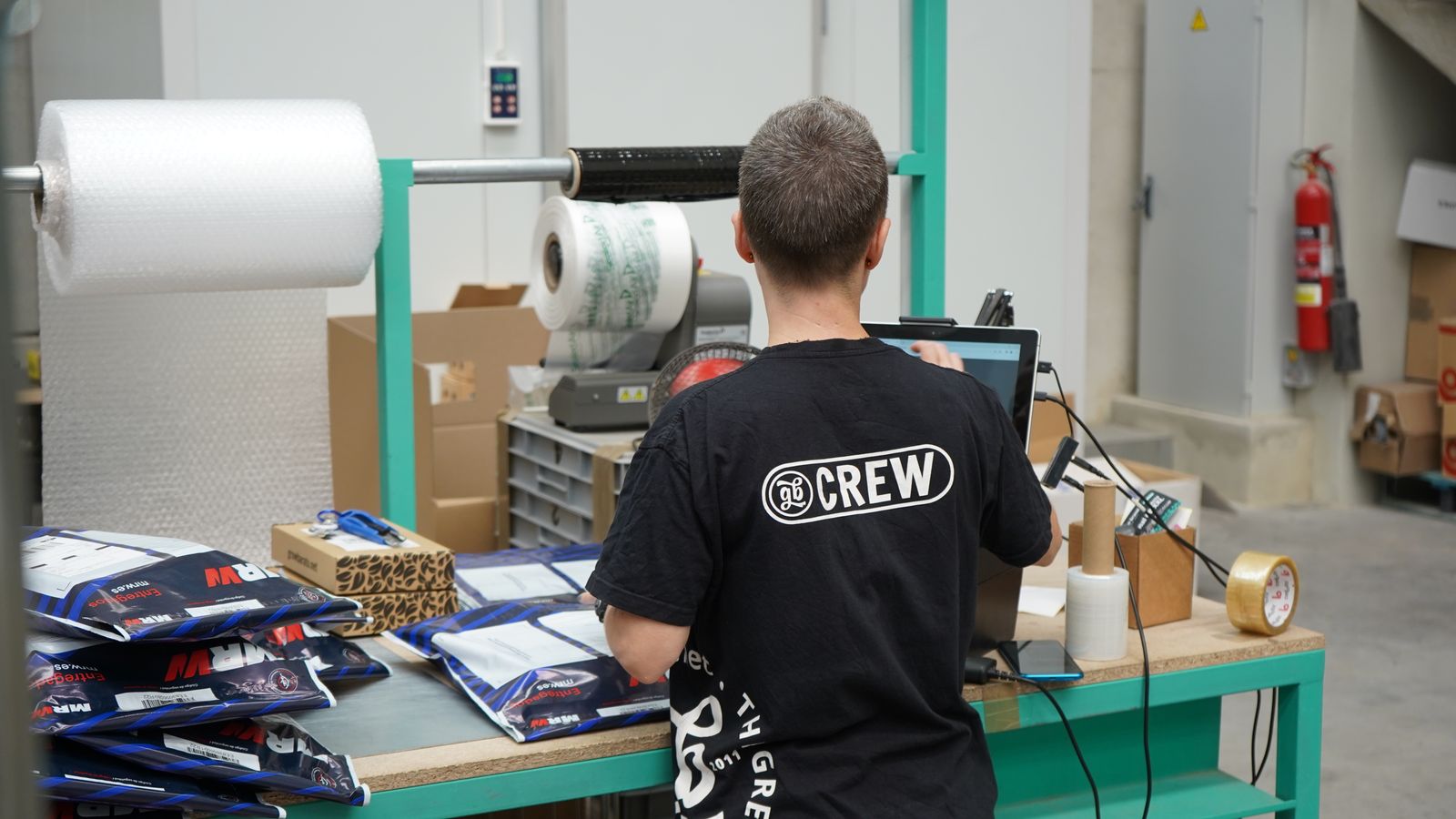
Warehouse operations tend to run on tribal knowledge and paper counts long after a business has outgrown that approach — and the cost shows up as stockouts, overstocking, and picking errors that eat into margin. Odoo's warehouse tooling is built specifically around those failure points.
Real-time inventory instead of periodic counts
Centralized, live tracking of stock levels and product variants means the numbers reflect what's actually on the shelf, not what a count from two weeks ago said was there.
Barcode scanning to cut manual entry errors
Barcode-driven picking, packing and stock transfers remove a lot of the human error that comes with manual data entry — and speed up the process at the same time.
Routing that avoids wasted movement
Odoo lets a business define specific warehouse routes so products are stored and picked in a logical order, cutting down on unnecessary walking and handling time.
Batch and serial tracking where it matters
For products that need to be traceable — pharmaceuticals, electronics, anything subject to recalls or warranty claims — batch and serial tracking makes it possible to trace an individual item's movement through the warehouse.
Multiple warehouses, one system
Businesses running more than one warehouse can manage separate inventories and routing rules for each location while still working from a single platform.
Reordering that doesn't rely on someone remembering
Automated reorder rules, based on historical sales data, help avoid both stockouts and the excess inventory that ties up cash unnecessarily.
The common thread is visibility — most warehouse inefficiency comes from not knowing what's actually happening until it's already a problem.